

Yamas and Niyamas in Daily Life: 10 Ethical Foundations of Yoga
Introduction: Beyond Religious Commandments
Many newcomers mistakenly view the Yamas and Niyamas as rigid moral commandments or guilt-inducing dogmas. In classical yoga, however, Sage Patañjali framed them as practical laws of energetic conservation.
When you lie (Asatya), harm others (Hiṃsā), or hoard possessions (Parigraha), your subconscious mind remains in chronic agitation, guilt, and defensive alert. By aligning your thoughts and deeds with the 10 Yamas and Niyamas, mental conflict evaporates, leaving the nervous system calm and grounded.
The 5 Yamas: Harmony with the World
Yama | Sanskrit Meaning | Modern Daily Life Application |
|---|---|---|
1. Ahiṃsā | Non-violence & Compassion | Practicing gentle self-talk on the mat (no forcing postures) and compassionate speech with colleagues. |
2. Satya | Truthfulness & Integrity | Speaking honest words with kindness; refusing to exaggerate or wear false social masks. |
3. Asteya | Non-stealing | Respecting others' time, intellectual property, and energetic boundaries. |
4. Brahmacarya | Energy Conservation | Channeling vital energy toward higher growth rather than mindless sensory dissipation. |
5. Aparigraha | Non-possessiveness | Decluttering physical possessions, letting go of obsessive outcomes, and digital minimalism. |
The 5 Niyamas: Harmony with the Self
Niyama | Sanskrit Meaning | Modern Daily Life Application |
|---|---|---|
1. Śauca | Purity & Cleanliness | Nourishing the body with clean sattvic food, pure water, and keeping a clutter-free living space. |
2. Santoṣa | Contentment | Finding peace in the present moment rather than postponing happiness to future achievements. |
3. Tapas | Self-Discipline / Inner Fire | Consistency in daily practice (*sādhana*), even when motivation is low or weather is cold. |
4. Svādhyāya | Self-Study & Sacred Reading | Daily reflection, journaling, and reading classical wisdom texts like the *Bhagavad Gītā*. |
5. Īśvarapraṇidhāna | Surrender to Higher Wisdom | Releasing ego control and trusting the natural unfolding of life with humble gratitude. |
Ahimsa on the Mat: Preventing Yoga Injuries
The first and most important Yama is Ahiṃsā (Non-Violence). In modern studio culture, students frequently violate Ahimsa against their own bodies by:
• Forcing knees into painful Lotus poses (*Padmāsana*).
• Collapsing into shoulders during *Caturaṅga*.
• Criticizing their physical appearance in front of studio mirrors.
60-Second Micro-Drill: Evening Santoṣa Check
Before sleeping tonight, take 60 seconds to cultivate Santoṣa (Contentment):
• Lie down comfortably and place both hands over your heart.
• Recall three simple moments from your day (a warm cup of tea, a deep breath, a kind smile).
• Whisper: "For this moment, I have enough, I do enough, I am enough."
• Feel the parasympathetic relaxation wash through your shoulders and jaw.
Conclusion
The Yamas and Niyamas are more than philosophical concepts; they offer practical guidance for living with greater awareness, compassion, discipline, and balance. From practicing Ahimsa by respecting your body's limits to cultivating Santosha through gratitude, these ten principles can help bring the essence of yoga into everyday life.
You don't need to master all ten principles at once. Start with one Yama or Niyama, observe how it influences your thoughts and actions, and gradually incorporate it into your daily routine. Consistent reflection and mindful practice can help you develop a deeper connection with yourself and the people around you.
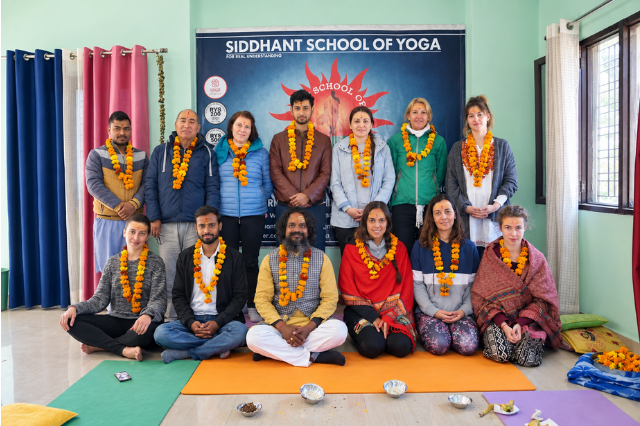
At Siddhant School of Yoga in Rishikesh, traditional yogic philosophy is an integral part of the journey toward a more mindful and meaningful practice.
Ready to explore authentic yoga philosophy? Discover our yoga teacher training courses and retreats to deepen your understanding of yoga beyond physical postures.
Frequently Asked Questions
Q1. Are Yamas and Niyamas religious rules
Q2. What should I do if Satya (truth) conflicts with Ahimsa (non-harm)?
Q3. How can I integrate these ethics into a busy workday?
Siddhant School of Yoga
Yoga Master & Ashram Guide
Dedicated to sharing traditional yogic sadhana, Vedic philosophy, and authentic Himalayan spiritual practices at Siddhant School of Yoga in Rishikesh, India.