

The 8 Limbs of Ashtanga Yoga Explained: A Complete Practical Guide
Introduction: The Living Tree of Yoga
Many modern practitioners encounter the term *Ashtanga* through the dynamic, sweat-inducing asana sequences of Ashtanga Vinyasa. However, in classical Sanskrit philosophy, *Aṣṭa* means "eight" and *Aṅga* means "limb" or "part".
Patañjali did not design an athletic workout; he presented an integrated lifestyle system where outer ethical purity supports internal mental stillness.
{यमनियमासनप्राणायामप्रत्याहारधारणाध्यानसमाधयोऽष्टावङ्गानि}
Yama-niyamāsana-prāṇāyāma-pratyāhāra-dhāraṇā-dhyāna-samādhayo 'ṣṭāv aṅgāni
Yoga Sūtra 2.29
The 8 Limbs at a Glance
# | Sanskrit Limb | IAST Transliteration | English Meaning | Primary Focus |
|---|---|---|---|---|
1 | यम | Yama | Social Ethics / Restraints | Harmonizing external relationships with the world. |
2 | नियम | Niyama | Personal Observances | Cultivating internal discipline, cleanliness, and self-study. |
3 | आसन | Āsana | Physical Posture | Creating a steady, easeful seat for energy flow. |
4 | प्राणायाम | Prāṇāyāma | Breath Regulation | Expanding and balancing vital life-force energy. |
5 | प्रत्याहार | Pratyāhāra | Sensory Withdrawal | Turning sensory attention inward away from external stimuli. |
6 | धारणा | Dhāraṇā | Concentration | Binding the mind to a single point of focus. |
7 | ध्यान | Dhyāna | Meditation | Continuous, uninterrupted flow of awareness. |
8 | समाधि | Samādhi | Absorption / Superconsciousness | Complete oneness with the object of meditation and True Self. |
External Limbs (Bahiraṅga) vs Internal Limbs (Antaraṅga)
Classical commentators divide the eight limbs into two major operational phases:
• Bahiraṅga Sādhana (Limbs 1–5):: Purifies human conduct, releases somatic tension, regulates autonomic breathing, and disconnects sensory overload.
• Antaraṅga Sādhana (Limbs 6–8):: When Dhāraṇā, Dhyāna, and Samādhi are focused simultaneously on one object, Patañjali terms this master integration **Saṃyama** (*Sūtra 3.4*), unlocking profound intuitive wisdom (*Prajñā*).
60-Second Micro-Drill: Experiencing Pratyahara (Limb 5)
Try this simple exercise at your desk to experience sensory withdrawal:
• Sit comfortably upright and close your eyes.
• Open your ears to all ambient sounds around you (traffic, humming AC, voices) for 15 seconds without judging them.
• Now, shift your entire hearing awareness inward: listen solely to the soft rushing sound of your own inhalation and exhalation in your throat.
• Notice how external noises fade into background insignificance. This intentional withdrawal of sensory attachment is Pratyāhāra.
Conclusion
The eight limbs of Ashtanga Yoga, described by Sage Patanjali in the Yoga Sutras, offer a holistic path to personal growth, ethical living, and inner awareness. From Yama and Niyama to Asana, Pranayama, Pratyahara, Dharana, Dhyana, and Samadhi, each limb contributes to a deeper understanding of yoga beyond physical postures.
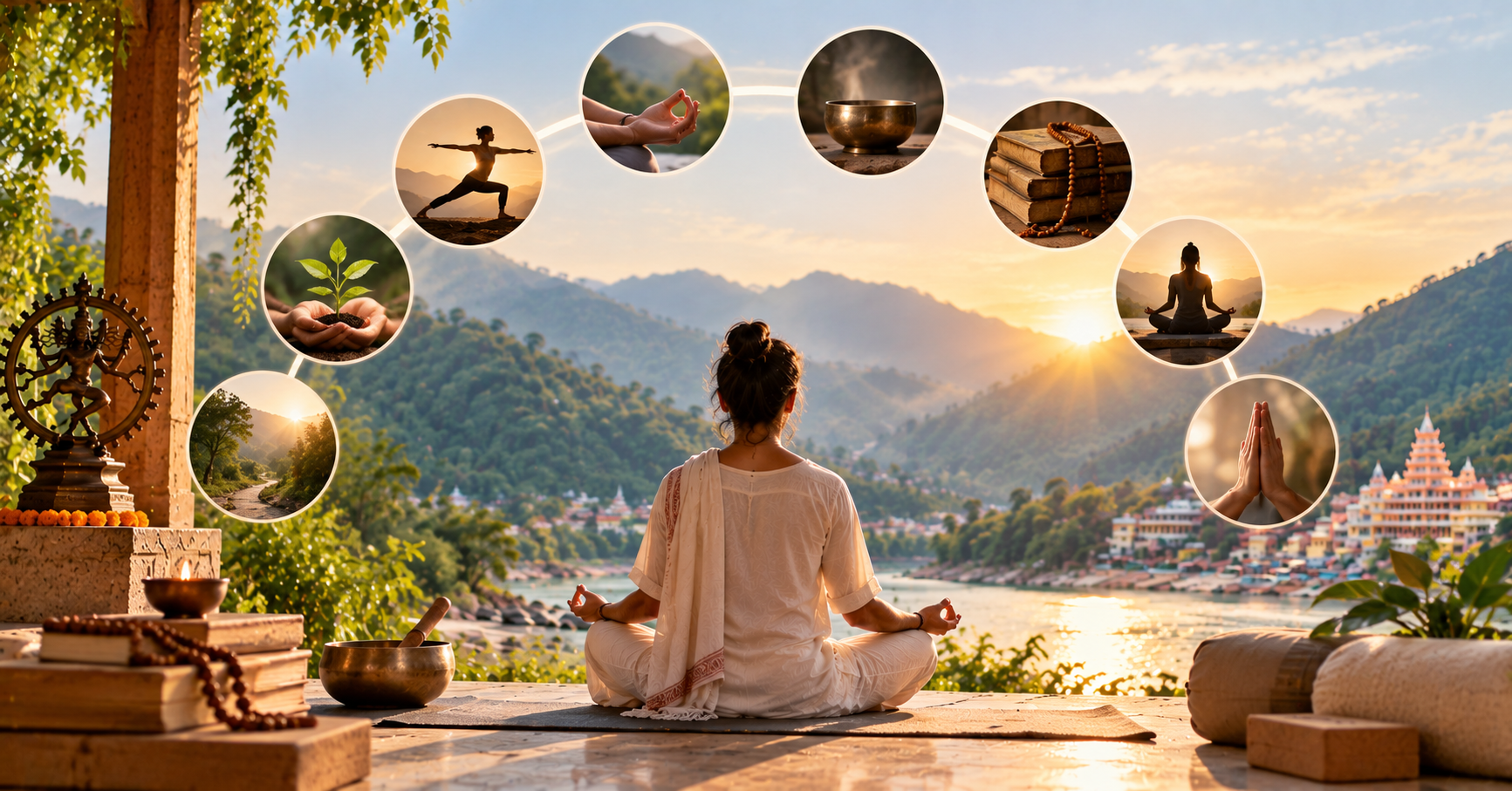
These eight limbs work together like the branches of a living tree. You can begin by practicing compassion and self-discipline, building a steady posture practice, observing your breath, and gradually developing concentration and meditation. Consistent practice helps bring the principles of yoga into your relationships, daily routines, and inner life.
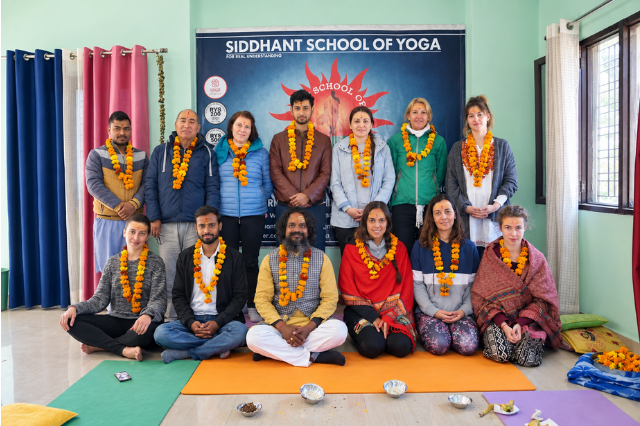
At Siddhant School of Yoga in Rishikesh, traditional yoga philosophy and practical training provide an opportunity to explore this classical eightfold path under experienced guidance.
Ready to deepen your understanding of yoga? Explore our yoga teacher training courses and retreats to discover how the eight limbs can shape your personal practice and teaching journey.
Frequently Asked Questions
Q1. What is the difference between Ashtanga Yoga and Ashtanga Vinyasa?
Q2. Do I have to master the Yamas before practicing Asana?
Q3. How are the 8 Limbs taught in Teacher Training?
Siddhant School of Yoga
Yoga Master & Ashram Guide
Dedicated to sharing traditional yogic sadhana, Vedic philosophy, and authentic Himalayan spiritual practices at Siddhant School of Yoga in Rishikesh, India.