

300-Hour vs 200-Hour Yoga TTC: Are You Ready for Advanced Training?
Introduction: Moving from Foundational Literacy to Master Teacher
For almost every dedicated yoga instructor, graduating from a 200-Hour Yoga Teacher Training Course is a watershed moment. You survived the 5:30 AM wake-up bells, memorized foundational Sanskrit terminology, conquered the fear of public speaking, and proudly received your Yoga Alliance graduation certificate.
However, after six to twelve months of teaching real students in community centers, gyms, and boutique studios, a humbling reality almost inevitably sets in:
• A student walks into your studio with a herniated lumbar disc, spinal stenosis, and chronic sacroiliac (SI) joint pain.
• A long-time student asks why their shoulder impinges in Caturāṅga Daṇḍāsana despite doing what you cued.
• A practitioner experiences an unexpected emotional breakdown or panic trigger during a heart-opening backbend.
• You realize you have been teaching the exact same three sequences on repeat, and your personal sadhana feels creatively and spiritually stagnant.
This realization is not a sign of failure—it is the universal marker of professional growth. A 200-hour training makes you safe, literate, and qualified to teach beginners. But it only introduces you to the shoreline of yoga’s vast ocean.
When you are ready to transition from a generalist instructor into an authoritative, master-level educator capable of working with complex injuries, leading transformative retreats, and mentoring other teachers, the 300-Hour Advanced Yoga Teacher Training is your natural next step.
In this comprehensive guide, we break down the exact curriculum differences between 200H and 300H programs, the five objective readiness signs that prove you are prepared, how the Yoga Alliance RYT-500 pathway works, and what to expect during an advanced immersion at Siddhant School of Yoga in Rishikesh.
1. The Definitive Comparison: 200-Hour vs. 300-Hour vs. 500-Hour YTTC
Understanding the global Yoga Alliance credential hierarchy is essential before investing your time and financial resources:
Educational Dimension | 200-Hour Foundational TTC | 300-Hour Advanced TTC | 500-Hour Master Level (200 + 300) |
|---|---|---|---|
Primary Objective | Foundational literacy, injury prevention, basic cueing, personal sadhana. | Specialization, clinical therapeutics, advanced adjustments, subtle energy. | Master-level authority, teacher training leadership, workshop direction. |
Target Candidate | Beginners, intermediate practitioners, aspiring new instructors. | Certified 200-Hour graduates with active teaching or deep practice. | Senior teachers, studio owners, retreat leaders, teacher trainers. |
Prerequisite | Sincere personal practice and open mind (no prior cert required). | Official 200-Hour Yoga Alliance Certificate from an RYS-200. | Graduation from both RYS-200 and RYS-300 accredited schools. |
Āsana Depth | ~60 foundational postures; standard modifications and basic alignment. | Complex inversions, arm balances, dynamic Vinyāsa Krama, therapeutics. | Total biomechanical body reading; custom adaptations for all bodies. |
Anatomy Scope | Gross musculoskeletal anatomy (major bones, muscle groups, joints). | Applied clinical kinesiology, fascial biotensegrity, spinal pathologies. | Neuromuscular repatterning, trauma-informed somatics, vagal toning. |
Philosophy Scope | Broad survey of Patañjali’s 8 Limbs and core Bhagavad Gītā concepts. | Deep scriptural analysis: Upaniṣads, Sāṃkhya philosophy, Tantra. | Lineage transmission, living ethics, philosophy lectures, teacher ethics. |
Practicum Focus | Overcoming stage fright, guiding 1-on-1 sun salutations, class pacing. | Assisting complex bodies, group orchestration, master adjustments. | Mentoring other teachers, designing specialized curriculum & workshops. |
Yoga Alliance Status | Eligible for RYT-200 | Qualifies you to register for RYT-500 (combined with 200h). | Eligible for RYT-500 (and with 1,000h experience: E-RYT 500). |
2. The 5 Objective Signs You Are Ready for a 300-Hour Advanced Training
A common mistake made by enthusiastic yogis is rushing directly from a 200-hour training into a 300-hour program within a few weeks. At Siddhant School of Yoga, we strongly advise students: teach first, integrate your foundation, and let real-world experience reveal your knowledge gaps.
Sign 1: You Have Logged at Least 30 to 50 Teaching Hours
When you first graduate from a 200-hour training, your cognitive bandwidth is consumed by basic logistics: remembering the names of postures, modulating your voice, watching the clock, and keeping students facing the right direction.
Only after you have taught 30 to 50 real classes does teaching shift from conscious effort into muscle memory. Once you no longer have to think about basic cues, your eyes and attention are finally free to observe subtle student biomechanics. This is the exact moment an advanced training yields maximum value.
Sign 2: You Encounter Student Pathologies You Cannot Safely Modify
In a standard 200-hour training, modifications are rudimentary: 'Use a block if your hands don't reach the floor' or 'Bend your knees if your hamstrings are tight.' In the real world, students present with sacroiliac (SI) joint hypermobility, cervical spine disc compression, subacromial shoulder impingement, and prenatal restrictions. If you feel under-equipped, you are ready for advanced therapeutics.
Sign 3: Your Personal Āsana Practice Has Hit a Plateau
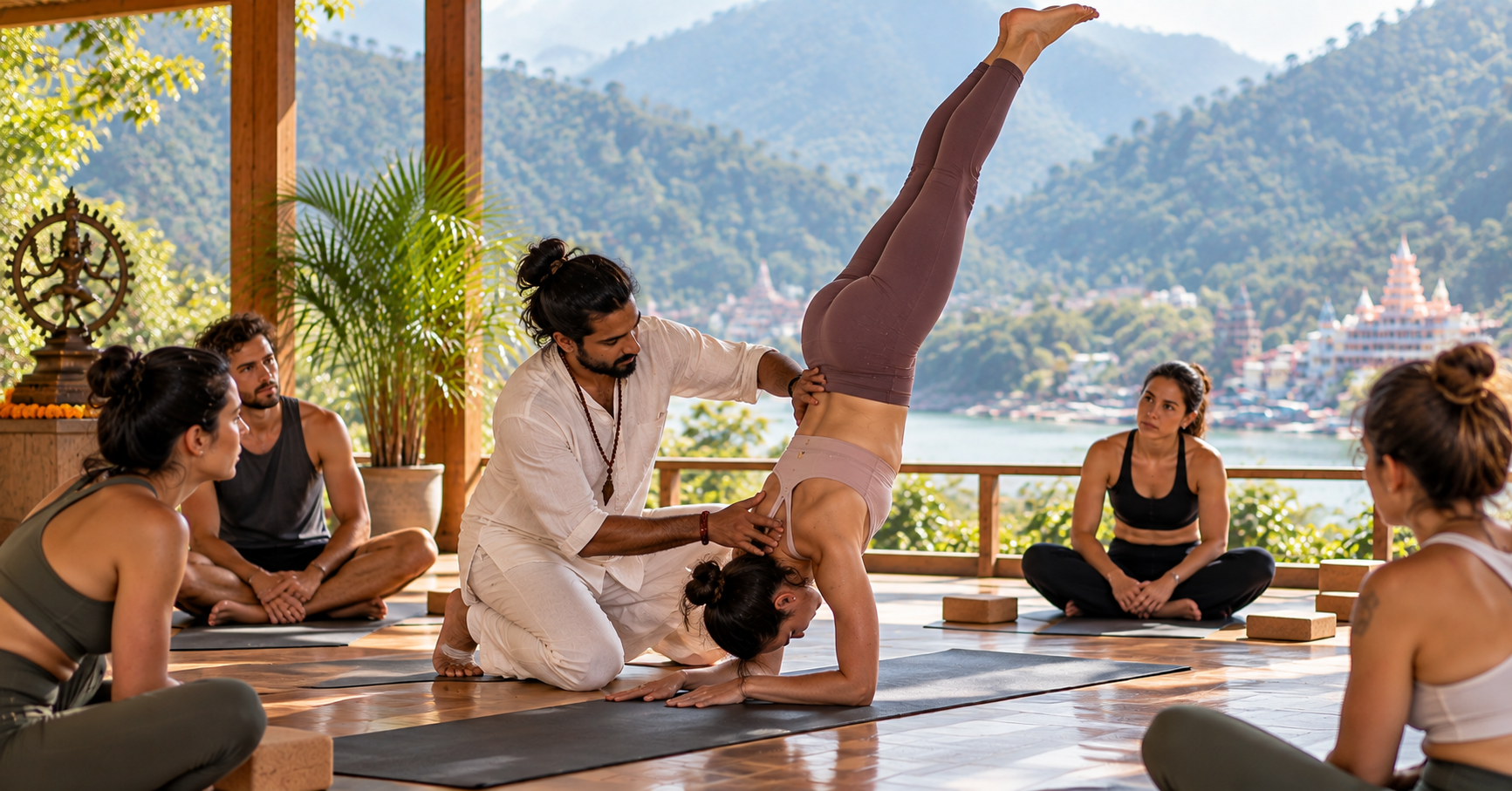
In a 200-hour training, time constraints prevent deep exploration of advanced postures. If you are eager to master dynamic arm balances (Bakasana, Tittibhāsana, Aṣṭavakrāsana), stable inversions (Pincha Mayūrāsana, Handstand), or deep thoracic backbends without lumbar compression, an advanced immersion provides the intensive daily laboratory time and personal adjustments to break through safely.
Sign 4: You Crave Subtle Energetics, Tantra & Classical Philosophy
As your practice matures, physical postures naturally begin to feel incomplete without their spiritual architecture. You start asking deeper questions about the 72,000 Nāḍīs, how advanced Kumbhakas alter brainwave states, Sāṃkhya philosophy, and how to integrate Tantric Kuṇḍalinī science into modern psychological well-being. In an advanced training in Rishikesh, philosophy transitions into living personal realization.
Sign 5: You Want to Elevate Your Yoga Business & Lead Retreats
If you are tired of trading hours for low hourly wages teaching drop-in gym classes, a 300-hour training is the catalyst for career sustainability. Graduating with an RYT-500 credential gives you the authoritative credibility needed to secure corporate wellness contracts, lead high-ticket international retreats, and design specialized continuing-education workshops.
3. Inside the 300-Hour Advanced Curriculum at Siddhant School of Yoga
At Siddhant School of Yoga, our 300-Hour Advanced YTTC in Rishikesh is engineered around five master-level educational pillars designed to transform confident teachers into visionary educators:
Pillar & Focus | Advanced Curriculum Details | Master Competency Acquired |
|---|---|---|
1. Advanced Vinyāsa Krama & Sequencing | Biomechanical staging of peak poses, Ayurvedic Dosha balancing (Vata/Pitta/Kapha), multi-level cueing. | Design intelligent, multi-layered class arcs for diverse student bodies. |
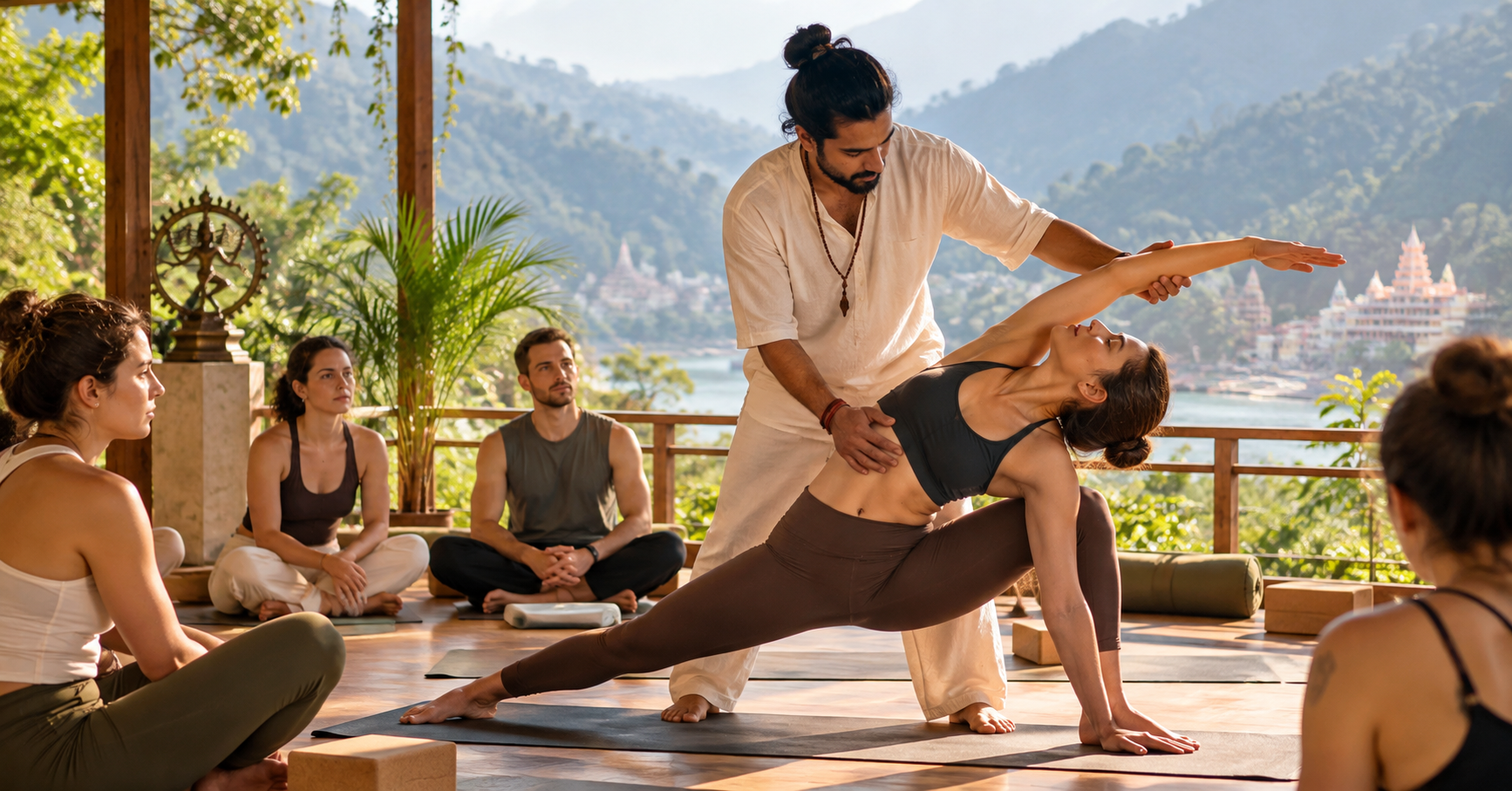
2. Clinical Body Reading & Adjustments | Visual postural assessment (pelvic tilts, scoliosis, shoulder elevation), master tactile leverage assists. | Deliver safe, transformative hands-on adjustments with complete consent. |
3. Yoga Therapy & Pathologies | Spine rehabilitation (herniations, sciatica, SI joint), shoulder/hip impingement, Polyvagal vagal toning. | Safely modify practices for injured students and chronic conditions. |
4. Subtle Energy & Kuṇḍalinī Science | Advanced Kumbhaka retentions, Mahā Bandha, 5 Prāṇa Vāyus, Cakra bīja mantras, classical Tantric texts. | Direct vital prana consciously to shift mental states and awakening. |
5. Ethical Yoga Business & Retreats | Retreat economics, pricing models, digital marketing, ethical branding, designing YACEP workshops. | Build a thriving, financially sustainable international yoga career. |
4. A Day in the Life: The 300-Hour Advanced Ashram Schedule
How does an advanced training feel compared to a foundational 200-hour course? While a 200-hour training is physically exhausting as your body adapts to twice-daily practice, a 300-hour training is intellectually rigorous, energetically deep, and intensely focused on pedagogical refinement:
Time Block | Advanced Ashram Activity | Pedagogical & Energetic Purpose |
|---|---|---|
05:30 AM | Wake-up Bell & Ayurvedic Herbal Infusion | Awakening during Brahmamuhūrta; digestive reset. |
06:00 – 07:30 AM | Advanced Prāṇāyāma, Bandhas & Meditation | Mastering Kumbhaka breath retentions and subtle channel purification. |
07:45 – 09:30 AM | Master Masterclass (Haṭha / Aṣṭāṅga Vinyāsa) | Deep physical practice; exploring advanced posture modifications. |
09:30 – 10:30 AM | Nourishing Sattvic Breakfast & Sun Break | Wholesome Ayurvedic nutrition supporting physical cellular repair. |
10:45 – 12:15 PM | Clinical Biomechanics & Yoga Therapy | Hands-on postural assessments, spinal pathology drills, and case studies. |
12:30 – 01:30 PM | Advanced Philosophy (Upaniṣads & Tantra) | Scriptural deconstruction, Sāṃkhya philosophy, and living ethics. |
01:30 – 02:30 PM | Wholesome Ayurvedic Sattvic Lunch | Nourishing organic vegetarian meal; mindful eating practice. |
02:30 – 04:00 PM | Rest, Contemplation & Sequencing Homework | Mandatory integration window; analyzing anatomical case studies. |
04:00 – 05:30 PM | Vinyāsa Krama & Inversion Laboratory | Deconstructing peak poses; arm balance drills and wall therapeutics. |
05:45 – 07:00 PM | Advanced Hands-On Adjustment Clinics | Practicing master adjustments and peer feedback in rotating pods. |
07:00 – 08:00 PM | Subtle Energy Meditation / Kīrtan / Satsang | Parasympathetic down-regulation; sacred sound immersion. |
08:00 – 09:00 PM | Light Nourishing Sattvic Dinner | Easily digestible soups, khichdi, and warm herbal digestives. |
09:00 – 10:00 PM | Contemplation & Quiet Reading | Journaling and preparing for next day's teaching clinics. |
10:00 PM | Lights Out & Noble Silence (Mauna) | Deep restorative sleep and neurological consolidation. |
5. The Yoga Alliance Accreditation Pathway: How to Become an RYT-500
Navigating Yoga Alliance’s acronyms and credential requirements can be confusing for teachers. The pathway to RYT-500 requires completing an accredited 200-hour training (RYS-200), completing an accredited 300-hour training (RYS-300), and logging at least 100 teaching hours online after graduating from your 200-hour program.
Step | Action Required | Verification & Outcome |
|---|---|---|
Step 1 | Graduate from an Accredited RYS-300 | Complete 300-hour residential training at Siddhant School of Yoga. |
Step 2 | Submit Certificate on Yoga Alliance | Log into your YogaAlliance.org account and upload your 300H diploma. |
Step 3 | Confirm 100 Teaching Hours | Confirm logging at least 100 teaching hours since your 200H graduation. |
Step 4 | School Electronic Verification | Siddhant School confirms your graduation on the Yoga Alliance portal. |
Step 5 | Designation Upgrade to RYT-500 | Your credential automatically upgrades to RYT-500 on the global directory. |
6. Actionable 60-Second Readiness Audit: Are You Ready for 300H?
Take 60 seconds with a pen and paper to score your current readiness:
Readiness Question | Your Response | Points |
|---|---|---|
1. Do you hold an official 200-Hour Yoga Alliance certificate? | Yes / No | 20 Points |
2. Have you taught at least 30 to 50 public, private, or online classes? | Yes / No | 20 Points |
3. Do you maintain a consistent personal asana & meditation practice? | Yes / No | 20 Points |
4. Do you frequently encounter student injuries you wish you could modify better? | Yes / No | 20 Points |
5. Are you eager to study advanced breath retention, subtle nadis, and philosophy? | Yes / No | 20 Points |
• 80 to 100 Points: Prime Window! You have the practical foundation and knowledge hunger to extract 100% value from a 300-hour advanced training.
• 60 Points: Ready with Mentorship. You qualify to enroll, but committing to 20 more teaching hours before arrival will amplify your results.
• Under 40 Points: Focus on 200H First. If you do not yet hold a 200H certificate or have never taught, enroll in our 200-Hour Foundational Yoga TTC first.
Conclusion
Moving from a 200-hour to a 300-hour Yoga Teacher Training Course is an important step in your journey as a yoga teacher. While the 200-hour course builds your foundation in asana, anatomy, philosophy, and teaching methodology, the 300-hour advanced training helps you deepen your knowledge, refine your teaching skills, and explore advanced posture adjustments, yoga therapy, and intelligent sequencing.
Before enrolling, assess your teaching experience, personal practice, and readiness to work with diverse student needs. Taking time to apply your foundational knowledge in real teaching situations can help you gain more value from advanced training.
At Siddhant School of Yoga in Rishikesh, the 300-hour advanced yoga teacher training offers an opportunity to develop your practice and teaching approach under experienced guidance in an immersive learning environment.
If you already hold a recognized 200-hour yoga teacher training certificate and feel ready to take the next step, explore the 300-Hour Advanced Yoga Teacher Training in Rishikesh to learn more about the curriculum, eligibility, and enrollment process.
Frequently Asked Questions
Q1. Can I take a 300-Hour TTC if my 200-Hour was from a different yoga school?
Q2. Can I jump straight into a 300-Hour training without doing a 200-Hour training first?
Q3. Is a 300-Hour training physically harder than a 200-Hour training?
Q4. How long does the 300-Hour residential training take in Rishikesh?
Q5. What if I completed my 200-Hour training online during COVID?
Siddhant School of Yoga
Yoga Master & Ashram Guide
Dedicated to sharing traditional yogic sadhana, Vedic philosophy, and authentic Himalayan spiritual practices at Siddhant School of Yoga in Rishikesh, India.