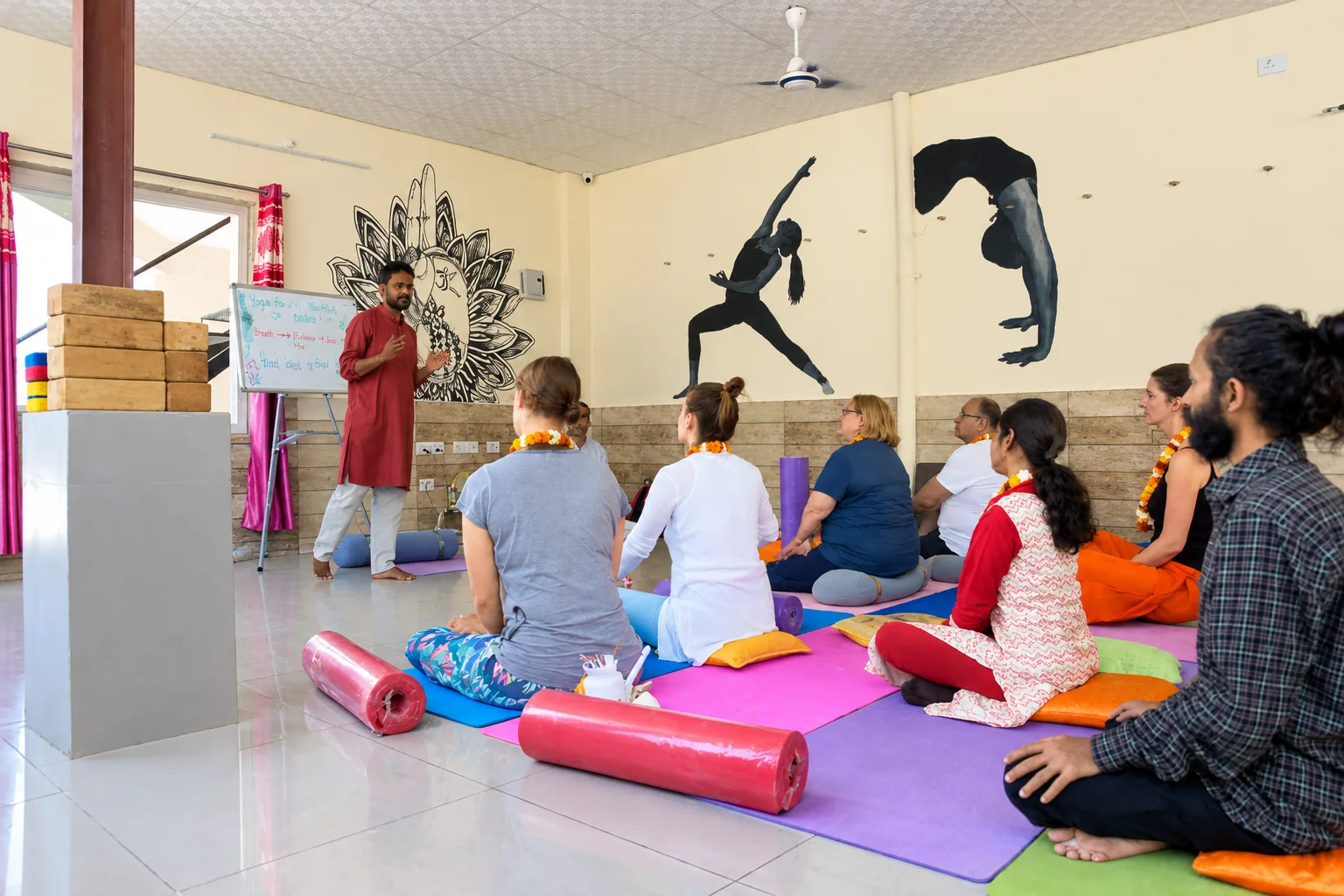


200-Hour Yoga Teacher Training in Rishikesh: Syllabus & Schedule
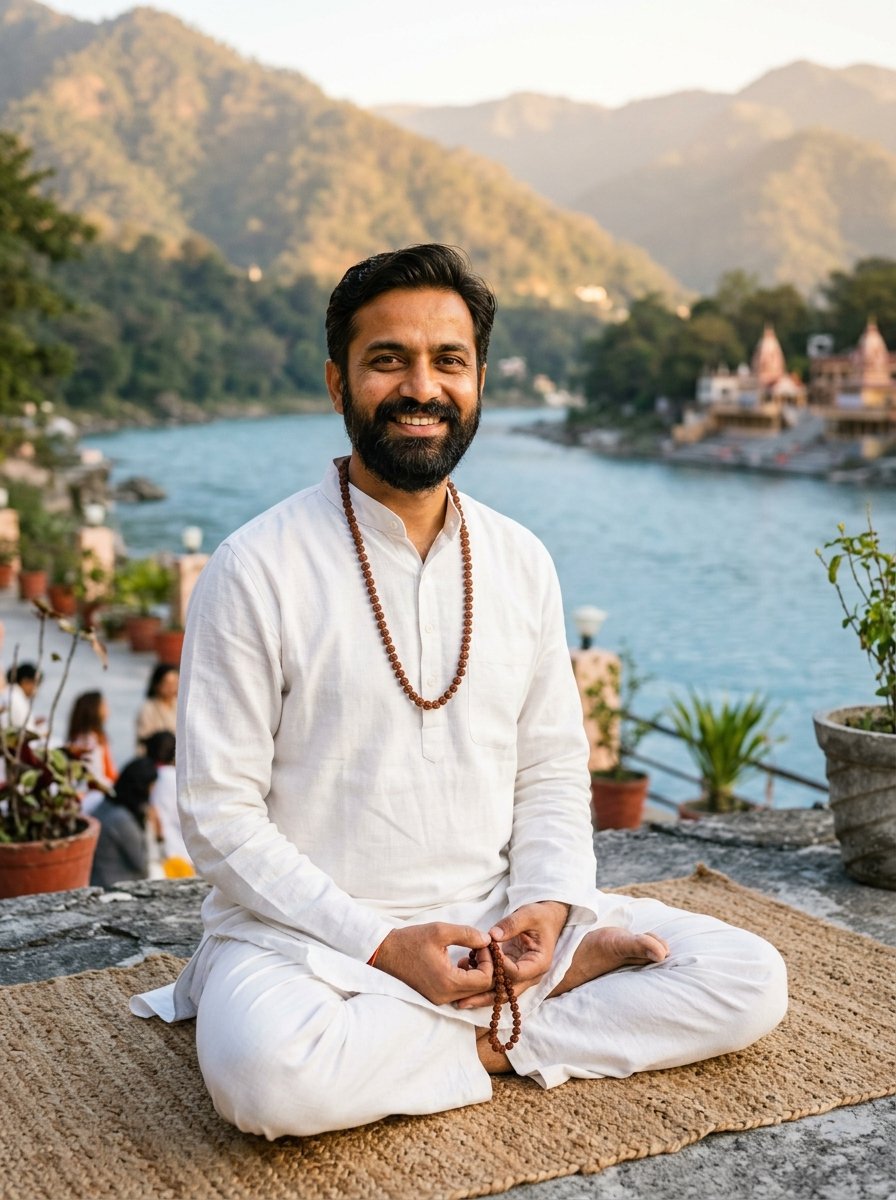
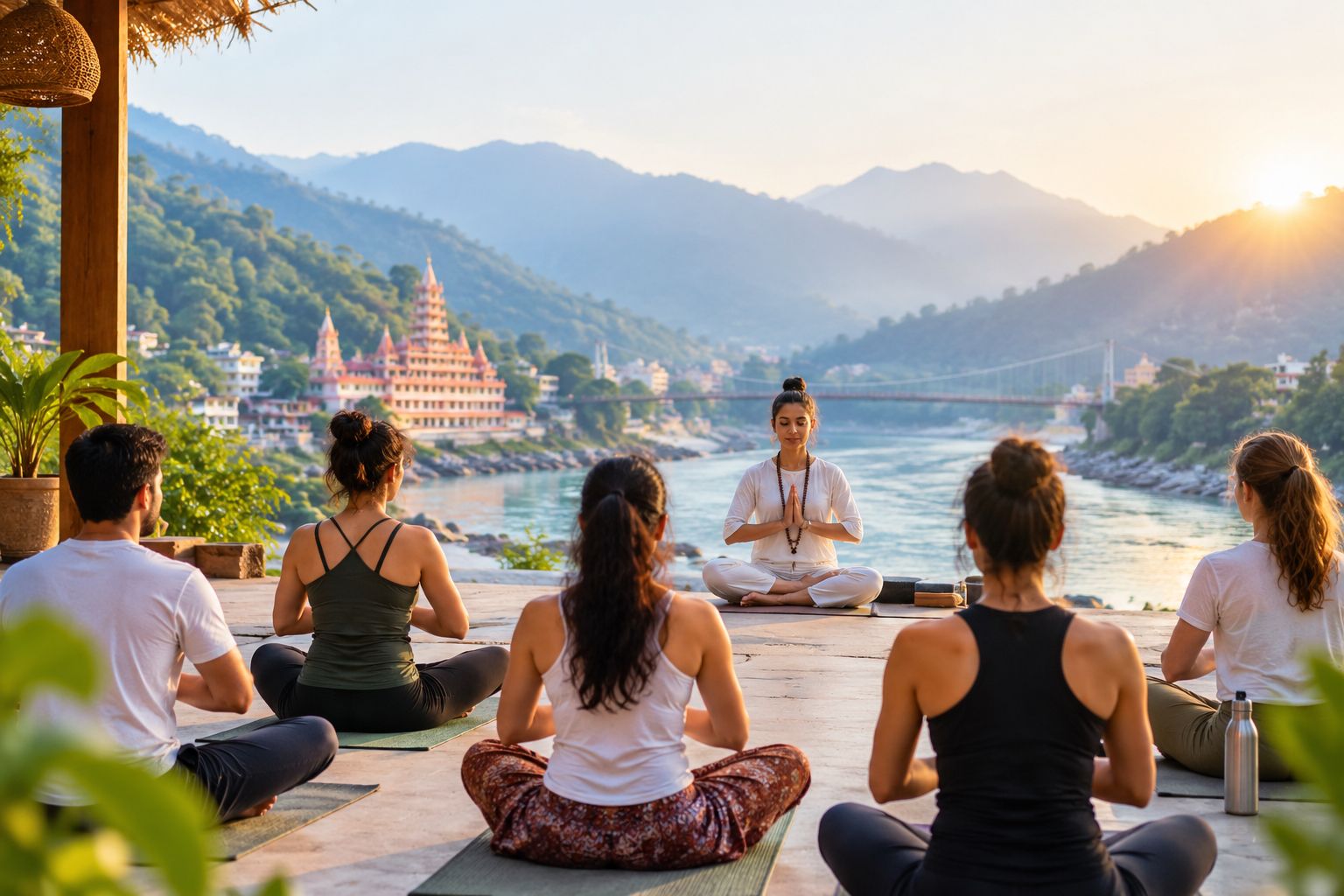
Introduction: The Journey of a Lifetime to the Yoga Capital of the World
Every autumn and spring, a familiar ritual unfolds across northern India. Hundreds of international seekers, fitness professionals, and dedicated practitioners land at New Delhi’s Indira Gandhi International Airport, board connecting flights to the Himalayan foothills of Dehradun, and drive into the holy valley of Rishikesh, Uttarakhand.
As your taxi winds through the lower Shivalik hills, the air shifts. The heavy exhaust of the plains gives way to the crisp mountain breeze of the Himalayas. Below you flows the sacred emerald-green water of the holy Gaṅgā (Ganges), fringed by ancient white-sand riverbanks, forested peaks, and the reverberating toll of ashram temple bells.
Enrolling in a 200-Hour Yoga Teacher Training Course (YTTC) is far more than an educational credential or career pivot. It is an ancient rite of passage. In modern Western studios, yoga teacher trainings are frequently fragmented across hurried weekend modules squeezed between exhausting corporate workweeks. In Rishikesh, yoga is not a 60-minute fitness workout; it is an all-encompassing way of living.
Whether your dream is to launch an international teaching career, establish a boutique studio, or step away from modern digital burnout to immerse in authentic personal sādhana (spiritual practice), this definitive guide gives you the unvarnished reality of what to expect: the authentic syllabus, the rigorous hour-by-hour ashram routine, the four-week emotional arc, and how to prepare before stepping onto the mat at Siddhant School of Yoga.
Why Rishikesh? The Living Lineage vs. Weekend Studio Certifications
To understand why thousands of international students travel thousands of miles to complete their 200-hour training in India, one must understand the concept of Guru-Śiṣya Paramparā (the unbroken lineage passed directly from master to disciple).
Training Element | Western Studio Weekend Course | Traditional Rishikesh Ashram Immersion |
|---|---|---|
Course Duration | 4 to 6 months of fragmented weekends | 26 to 28 days of continuous residential immersion |
Daily Environment | Commuting back to busy city life & chores | 100% protected, serene yogic sanctuary container |
Focus of Practice | Heavily tilted toward physical fitness/sweat | Holistic union: Āsana, Functional Anatomy, Mind & Spirit |
Daily Nutrition | Home cooked meals or processed takeout | 3 fresh Ayurvedic Sattvic vegetarian meals prepared daily |
Atmosphere & Air | Indoor air conditioning & fluorescent lights | Pure Himalayan mountain air & sacred Ganges breeze |
Spiritual Lineage | Often separated from Indian philosophical roots | Direct guidance from traditional Himalayan acharyas & scholars |
Rishikesh is recognized globally as the birthplace of yoga. For thousands of years, Vedic sages (ṛṣis), enlightened yogis, and masters like Swami Sivananda and Maharishi Mahesh Yogi meditated along these riverbanks. When you practice here, you practice inside an established energetic field (kṣetra) dedicated to inner awakening.
Furthermore, training in a peaceful sanctuary like Siddhant School of Yoga (located in the serene residential enclave of Veerbhadra / Visthapit Colony, away from the crowded tourist markets of central Tapovan) provides the quiet, protected space necessary to process deep emotional shifts, master complex breathwork, and absorb ancient philosophy without urban distraction.
The 5-Pillar Syllabus: Yoga Alliance RYS-200 Curriculum Breakdown
A legitimate 200-Hour Yoga Teacher Training must adhere to the international educational standards set by Yoga Alliance (USA) while honoring traditional Indian yogic science. The curriculum is divided into five interrelated educational pillars:
Module & Hours | Core Subjects Covered | Practical Competency Acquired |
|---|---|---|
1. Āsana Technique & Biomechanics (100 Hours) | Classical Haṭha Yoga & Aṣṭāṅga Vinyāsa Primary Series; daily alignment clinics for 60+ postures. | Master posture mechanics, modifications, prop usage, and safe cueing. |
2. Prāṇāyāma, Ṣaṭkarma & Energy (30 Hours) | 8 Classical Kumbhakas, 6 Shatkarma cleansing kriyas, Nadis, Chakras, and Bandhas. | Direct vital life-force regulation, detoxify the physical body, and quiet the mind. |
3. Functional Anatomy & Safety (20 Hours) | Musculoskeletal anatomy (Psoas, Rotator Cuff, Pelvis), joint safety, and Polyvagal theory. | Prevent injuries, understand anatomical variation, and regulate student nervous systems. |
4. Philosophy, Scripture & Ethics (30 Hours) | Patanjali's Yoga Sutras, Bhagavad Gita, Hatha Yoga Pradipika, and teacher-student ethics. | Ground teaching in authentic philosophical lineage and live yogic values. |
5. Methodology & Practicum (20 Hours) | Intelligent sequencing, voice modulation, trauma-informed hands-on assists, and peer teaching. | Independently design, pace, and guide full 60-minute classes with confidence. |
Module 1: Āsana Technique, Alignment & Biomechanics (100 Hours)
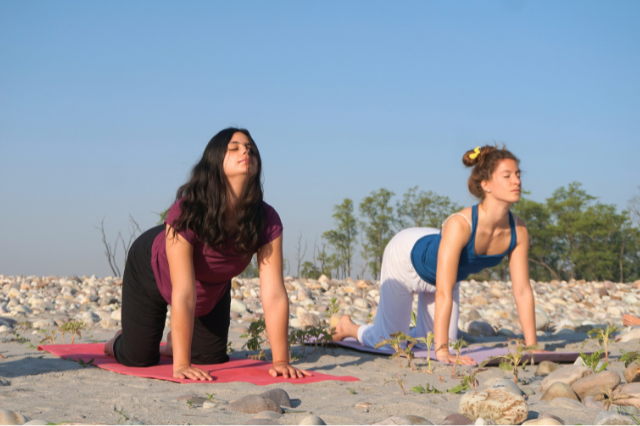
The physical practice forms the foundational container of your training. At Siddhant School of Yoga, we emphasize two complementary traditions: Classical Haṭha Yoga (static holds, breath synchronization, chakra awareness) and Aṣṭāṅga Vinyāsa Primary Series (dynamic breath-to-movement flow, heat-building ujjāyī breath, and dṛṣṭi gaze control).
1. Standing Postures: Tāḍāsana, Vīrabhadrāsana I, II & III, Trikoṇāsana, and Pārśvakoṇāsana. Focus on grounding, pelvic leveling, and arch activation.
2. Forward Bends & Hip Openers: Paścimottānāsana, Baddha Koṇāsana, and preparation for Padmāsana (Lotus Pose). Biomechanics of anterior pelvic tilt vs. lumbar spinal rounding.
3. Backbends & Heart Openers: Bhujṅgāsana (Cobra), Uṣṭrāsana (Camel), Dhanurāsana (Bow), and Ūrdhva Dhanurāsana (Wheel). Emphasizing thoracic extension without SI joint compression.
4. Inversions & Arm Balances: Śīrṣāsana (Headstand), Sarvāṅgāsana (Shoulderstand), Bakasana (Crow Pose), and Pincha Mayūrāsana. Wall drills, shoulder girdle stability, and contraindications.
5. Restorative & Cool-Down: Supta Baddha Koṇāsana, gentle restorative twists, and the scientific art of Śavāsana (Corpse Pose).
Module 2: Prāṇāyāma, Ṣaṭkarma & Subtle Energetics (30 Hours)
In the classical Himalayan tradition, āsana is merely the doorway; prāṇa (vital life-force) is the room itself. You will practice and learn the pedagogy of:
• Jala Neti: Nasal irrigation with lukewarm salted water using copper neti pots to clear sinus passages and calm the frontal brain.
• Kapālabhāti: Rhythmic active exhalations to awaken metabolic fire (jaṭharāgni) and clear mucus.
• Trāṭaka: Steady gazing at a continuous ghee lamp flame to cultivate laser-like concentration (dhāraṇā).
• Nauli Kriyā & Agnisāra: Abdominal churning and muscular isolation for visceral organ stimulation.
• 8 Classical Kumbhakas: Nāḍī Śodhana (alternate nostril breathing), Bhrāmarī (humming bee breath), Bhastrikā (bellows breath), Śītalī & Śītkārī (cooling breaths), and Ujjāyī (victorious oceanic breath).
• Subtle Energetics: The central triad of channels: Iḍā (lunar/cooling), Piṅgalā (solar/heating), and Suṣumnā (central spiritual river), alongside the 3 Bandhas (Mūla, Uḍḍīyāna, Jālandhara) and 7 Chakras.
Module 3: Applied Functional Anatomy & Physiology for Yogis (20 Hours)
Gone are the days when yoga teacher training relied on dogmatic, one-size-fits-all cues. Modern yoga teaching requires a deep, evidence-aware understanding of human biomechanics:
• Skeletal Variation vs. Soft Tissue Tension: Understanding why skeletal structure (femoral neck angle, acetabulum depth) dictates individual range of motion, and why pushing bone-on-bone compression leads to irreversible injury.
• The Psoas Major & Iliopsoas: The deep emotional core connecting lumbar spine to femur, and its direct biological link to the sympathetic stress response.
• Shoulder Girdle & Rotator Cuff: Protecting the supraspinatus and labrum during repetitive Caturāṅga Daṇḍāsana vinyasa transitions.
• Pelvic Biomechanics & Spine: Sacroiliac (SI) joint stability, lumbar lordosis preservation, and preventing hamstring origin tendinopathy ('yoga butt').
• Polyvagal Theory & Somatic Safety: How conscious respiratory pacing stimulates the vagus nerve, downregulating sympathetic fight-or-flight into ventral vagal rest-and-digest.
Module 4: Classical Yoga Philosophy, Scripture & Ethics (30 Hours)
Yoga philosophy in Rishikesh is not dry academic theory—it is an existential mirror. You will explore sacred Sanskrit texts guided by Acharya Siddhant and traditional scholars:
1. Patañjali's Yoga Sūtras: Deep analysis of Sūtra 1.2 ('Yogaś Citta Vṛtti Nirodhaḥ'), the 8 Limbs of Raja Yoga, the 5 Kleśas (mental afflictions), and the mechanics of Samādhi.
2. Śrīmad Bhagavad Gītā: Core lessons on Karma Yoga (selfless action without attachment to outcomes), Bhakti Yoga (devotional surrender), and Jñāna Yoga (self-inquiry).
3. Haṭha Yoga Pradīpikā: Svāmī Svātmārāma’s foundational manual on physical purification as the essential gateway to Raja Yoga.
4. Yogic Ethics & Code of Conduct: The sacred boundaries of the Guru-Śiṣya relationship, student consent, and living the ethical Yamas (Ahiṃsā, Satya, Asteya, Brahmacarya, Aparigraha).
Module 5: Teaching Methodology, Adjustments & Practicum (20 Hours)
Knowing yoga is one thing; transmitting it clearly, safely, and empathetically is another. The Teaching Practicum is where theory transforms into practical mastery:
• Class Architecture & Intelligent Sequencing: How to construct balanced class arcs—from centering and progressive warm-ups to peak pose staging, counter-stretching, and savasana.
• The 3-Tier Cueing Hierarchy: Foundation & Breath -> Directional Movement -> Felt-Sense Refinement.
• Hands-on Adjustments with Consent: Learning trauma-informed non-verbal consent markers, confident touch mechanics using body weight rather than muscular force, and spotting joint instability.
• Voice Modulation & Presence: Overcoming the fear of speaking in front of groups, projecting from the diaphragm, and finding your authentic teaching cadence.
A Day in the Life: The Hour-by-Hour Ashram Schedule
Living in an ashram means syncing your body's biological clock with natural circadian rhythms (Dinacaryā). Days are intensely full, physically demanding, and deeply transformative:
Time | Activity / Class | Biological & Spiritual Purpose |
|---|---|---|
05:30 AM | Morning Wake-Up Bell & Herbal Detox Tea | Awakening during Brahmamuhūrta; hydrating the gastrointestinal tract. |
06:00 – 07:30 AM | Ṣaṭkarma, Prāṇāyāma & Mantra Chanting | Purifying nasal passages, stimulating the nervous system, and centering the mind. |
07:45 – 09:15 AM | Classical Haṭha Āsana Practice | Building muscular endurance, spinal alignment, and breath-posture unity. |
09:30 – 10:30 AM | Fresh Sattvic Vegetarian Breakfast | Nourishing digestion with wholesome grains, fresh fruits, and herbal teas. |
10:45 – 12:00 PM | Yoga Philosophy (Sūtras & Bhagavad Gītā) | Intellectual study, self-inquiry (Svādhyāya), and understanding yogic ethics. |
12:15 – 01:30 PM | Applied Functional Anatomy & Biomechanics | Learning musculoskeletal anatomy, injury prevention, and postural adjustments. |
01:30 – 02:30 PM | Nutritious Ayurvedic Sattvic Lunch | Balanced meal of dal, basmati rice, seasonal greens, and digestive lassi. |
02:30 – 04:00 PM | Rest, Journaling & Personal Study | Mandatory rest buffer allowing gastric digestion and nervous system recovery. |
04:00 – 05:30 PM | Dynamic Aṣṭāṅga Vinyāsa Primary Series | Sweating out metabolic toxins and cultivating dynamic stamina and drishti focus. |
05:45 – 06:45 PM | Teaching Methodology & Alignment Clinic | Practicing voice cues, hands-on adjustments, and peer teaching in small pods. |
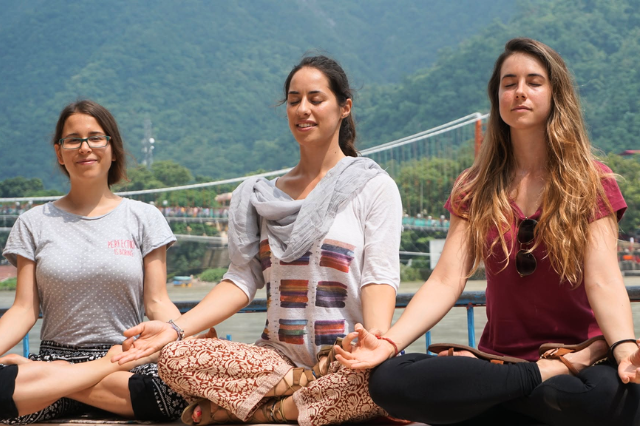
07:00 – 08:00 PM | Meditation / Yoga Nidrā / Evening Kīrtan | Transitioning into parasympathetic rest; soothing the conscious mind. |
08:00 – 09:00 PM | Light Nourishing Sattvic Dinner | Easy-to-digest khichdi, vegetable soups, and warm spiced golden milk. |
09:00 – 10:00 PM | Quiet Reflection & Reading | Reviewing daily lecture notes and quiet contemplation. |
10:00 PM | Lights Out & Noble Silence (Mauna) | Deep restorative sleep; cell regeneration and muscular recovery. |
The 4-Week Transformation Arc: What You Experience Week by Week
No one leaves a 200-hour training in Rishikesh the same person they arrived. Over 28 days, students consistently move through four distinct psycho-physical phases:
Phase & Week | Physical & Emotional Reality | Key Student Breakthrough |
|---|---|---|
Week 1: Deconstruction & Detox | Muscle soreness, jet lag, detox headaches, and mental resistance ('What did I sign up for?'). | Realizing everyone in the cohort is sore; letting go of perfectionism and ego. |
Week 2: Energetic Awakening | Soreness subsides; lung capacity expands; digestion becomes remarkably light and efficient. | Philosophy lectures begin reflecting personal life; emotional release during hip-openers. |
Week 3: Finding Your Voice | Stepping in front of peers for micro-teaching. Initial imposter syndrome turns into genuine presence. | Overcoming stage fright; discovering your unique vocal tone and empathetic authority. |
Week 4: Synthesis & Graduation | Leading complete 60-minute classes independently; passing theoretical and practical exams. | Graduation Vedic Havan fire ceremony; deep cohort sisterhood/brotherhood; stepping into RYT-200. |
The Teaching Practicum Ladder: How We Dissolve the Fear of Teaching
The single most common fear expressed by incoming students is: 'I have never taught anyone in my life—what if I freeze up or forget the names of the postures?' At Siddhant School of Yoga, we do not throw you into teaching at the end of the month. We employ a Progressive 4-Stage Practicum Ladder:
Stage | Format & Setting | Student Role & Learning Objective |
|---|---|---|
Stage 1 (Week 1) | 1-on-1 Micro-Teaching | Guiding a single classmate through 5 rounds of Sun Salutations using clear breath-and-movement cues. |
Stage 2 (Week 2) | Small Pods (3 to 4 students) | Teaching standing posture alignment and demonstrating verbal modifications with props for specific restrictions. |
Stage 3 (Week 3) | Half-Cohort (10 to 12 students) | Leading a 30-minute sequence (Warm-up, Peak Posture staging, and Cool-down) with music and vocal presence. |
Stage 4 (Week 4) | Full Class Master Exam | Designing, cueing, and leading a comprehensive 60-minute class independently graded by lead faculty. |
Ashram Life, Food & Accommodation: The Practical Reality
Living in an authentic yoga ashram is a joyful return to simplicity, but knowing what to expect ensures you arrive with grounded expectations:
• Accommodation: Clean, private rooms with attached en-suite bathrooms, or shared twin rooms with a trusted peer. Amenities include hot running water, clean bedding, ceiling fans, mosquito netting, study desks, and high-speed Wi-Fi in common areas. Located in peaceful Veerbhadra away from city noise.
• Sattvic Nutrition: Three fresh, freshly prepared Ayurvedic vegetarian meals daily. Wholesome dal, basmati rice, warm chapatis, steamed seasonal vegetables, light soups, khichdi, and fresh fruit bowls. Free of onions, garlic, excess chili, and preservatives. Gluten-free and vegan requirements easily accommodated.
• Ashram Etiquette: Respectful modesty is observed (shoulders and knees covered). Shoes are removed before entering yoga halls, temples, and dining areas. Punctuality is honored as a spiritual discipline.
6-Week Pre-Arrival Preparation & Packing Guide
To maximize your experience in Rishikesh and avoid early exhaustion during Week 1, follow this preparation roadmap:
1. Physical Conditioning: Practice 45–60 minutes of asana at least 4 times weekly. Prioritize sun salutations, standing poses, and wrist conditioning. Sit cross-legged on the floor for 15–20 minutes daily.
2. Core Reading List: 'The Heart of Yoga' (T.K.V. Desikachar), 'Four Chapters on Freedom' (Swami Satyananda Saraswati), and 'Light on Yoga' (B.K.S. Iyengar).
3. Essential Packing: 4–5 sets of modest cotton/linen yoga clothing, slip-on sandals, personal stainless steel water bottle, journal with pens, light meditation shawl, universal travel adapter (Types C, D, M), and personal toiletries.
4. Flights & Visa: Apply online for your Indian Tourist e-Visa at least 3 weeks before departure. Fly internationally to New Delhi (DEL) and take a 45-minute domestic connecting flight to Dehradun Airport (DED), where our private ashram driver meets you.
After Graduation: What Can You Do with an RYT-200 Certification?
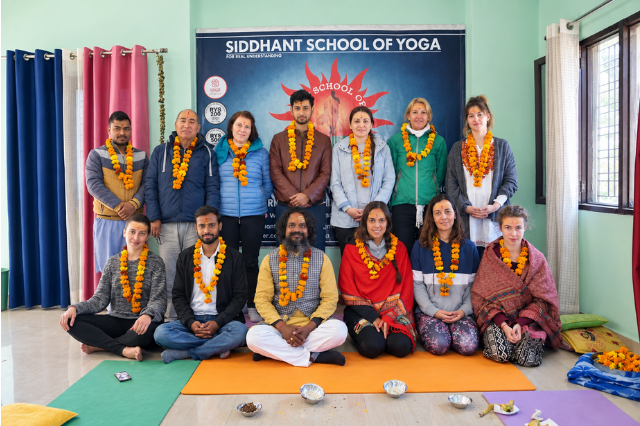
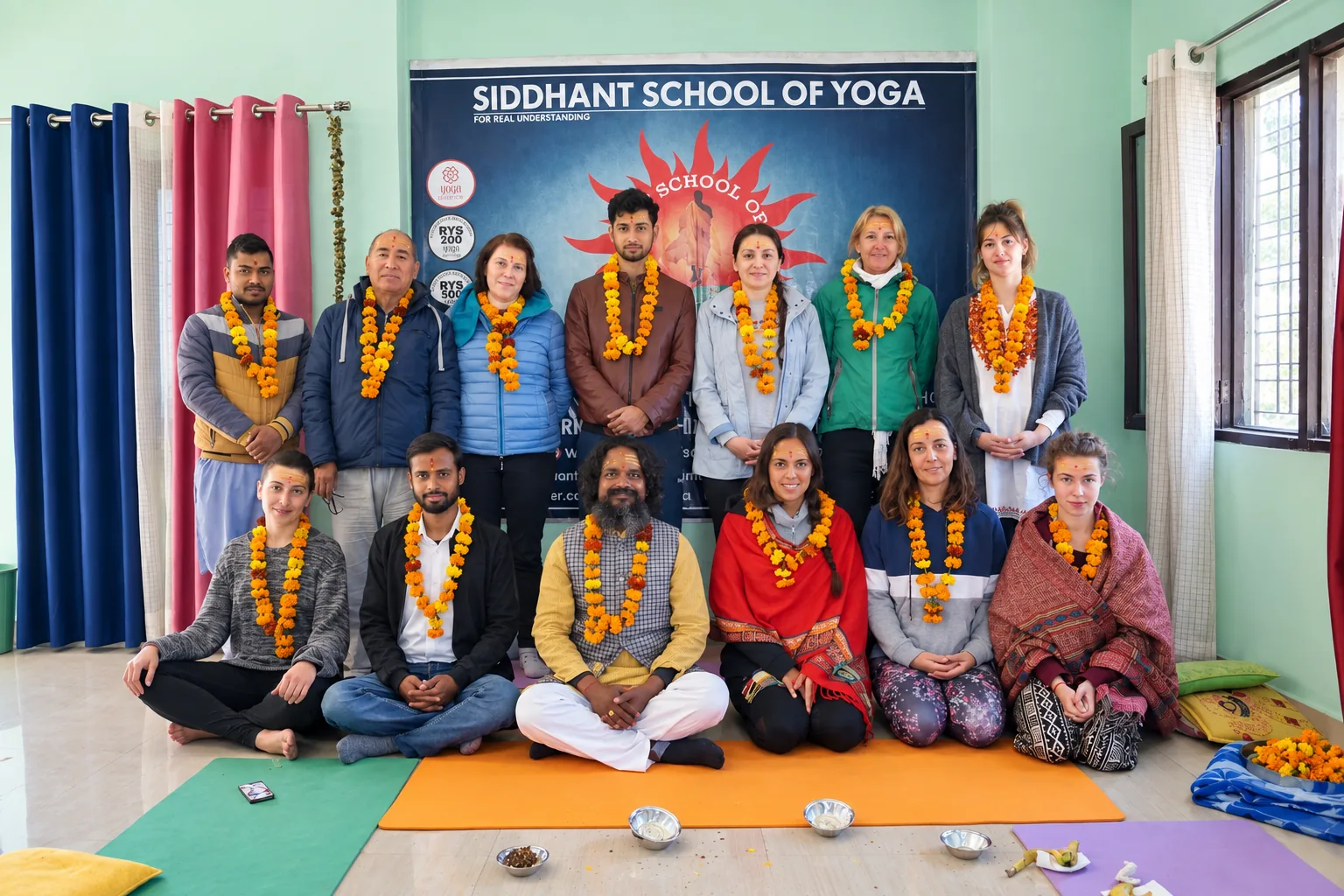
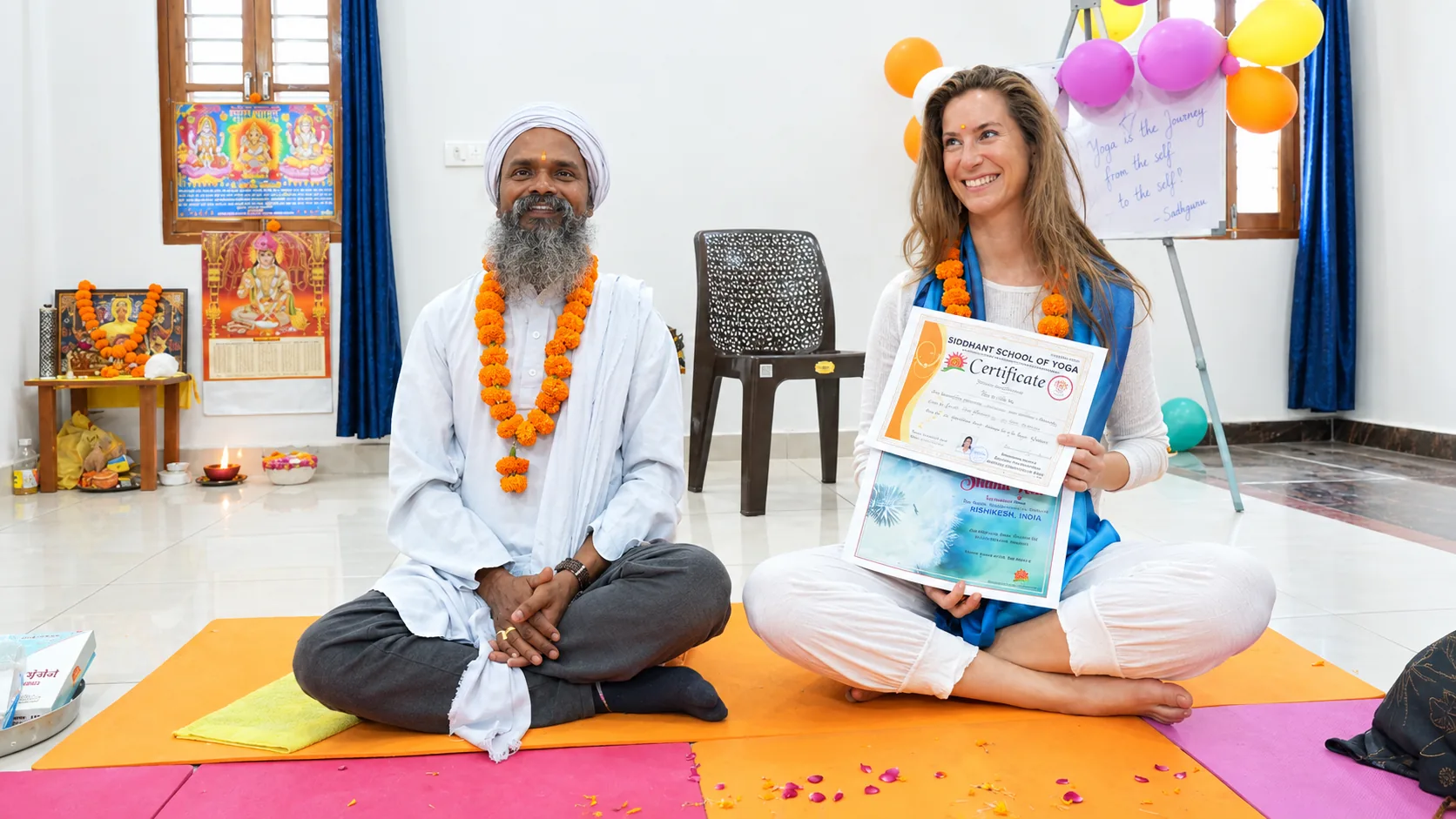
Graduation day at Siddhant School of Yoga culminates in an ancient Vedic Havan (Fire Yagya Ceremony) where graduates receive their international diplomas, chant sacred mantras, and receive their spiritual blessings.
With your accredited certificate from a Registered Yoga School (RYS-200), you can:
1. Yoga Alliance Registration: Register on the official global directory as an RYT-200, qualifying you to teach worldwide.
2. International Studio Teaching: Lead group classes, workshops, and private client sessions in studios, wellness centres, luxury resorts, and gyms across Europe, North America, Australia, and Asia.
3. Boutique Wellness Retreats: Host transformative weekend or week-long wellness retreats globally.
4. Pathway to RYT-500: Continue your education with our advanced 300-Hour YTTC to unlock the prestigious RYT-500 master credential.
Call to Action: Begin Your Journey at Siddhant School of Yoga
Choosing where to take your 200-hour training is one of the most important spiritual and professional decisions of your life. At Siddhant School of Yoga, we maintain intimate, small-cohort class sizes (limited to 12–15 students) to ensure every student receives individual posture adjustments, personalized mentoring, and direct access to our senior teachers.
Step beyond the noise of commercial studios. Come to the sacred foothills of Rishikesh, drink from the ancient springs of yogic wisdom, and discover the teacher waiting within you.
Contact & Enrollment Channel | Direct Link / Contact Detail |
|---|---|
Official Website | |
WhatsApp & Phone Inquiries | |
Direct Admissions Email | siddhantschoolofyoga@gmail.com |
Ashram Campus Address | Plot No. 281, near Shiv Chowk, Nirmal Block-B, Visthapit Colony, Veerbhadra, Rishikesh, Uttarakhand 249202, India |
200-Hour Course Landing Page | https://siddhantschoolofyoga.com/200-hour-yoga-teacher-training-rishikesh |
Conclusion
Choosing to undertake a 200-Hour Yoga Teacher Training in Rishikesh is a profound commitment to self-discovery, lineage-based learning, and professional mastery. Beyond the physical asanas and rigorous daily schedule lies an inner transformation that stays with you for a lifetime. Whether you aim to lead classes globally or simply deepen your personal practice, the sacred foothills of Rishikesh offer the ideal sanctuary. Embrace the journey, honor the tradition, and step into the teacher you are meant to be.
Frequently Asked Questions
Q1. Do I need to be advanced or super flexible to take a 200-Hour TTC?
Q2. Q2: Can I take this course if I don't intend to teach professionally?
Q3. Q3: What is the difference between RYS and RYT?
Q4. Q4: Is Rishikesh safe for solo female travelers?
Siddhant School of Yoga
Yoga Master & Ashram Guide
Dedicated to sharing traditional yogic sadhana, Vedic philosophy, and authentic Himalayan spiritual practices at Siddhant School of Yoga in Rishikesh, India.